Drew Braun · 1 October 2026
Unexpected Partnerships Emerge in Birchvale as Upgraded Fire Services, Expanded Hospitals, and Thriving Markets Inspire Community Sustainability Initiatives
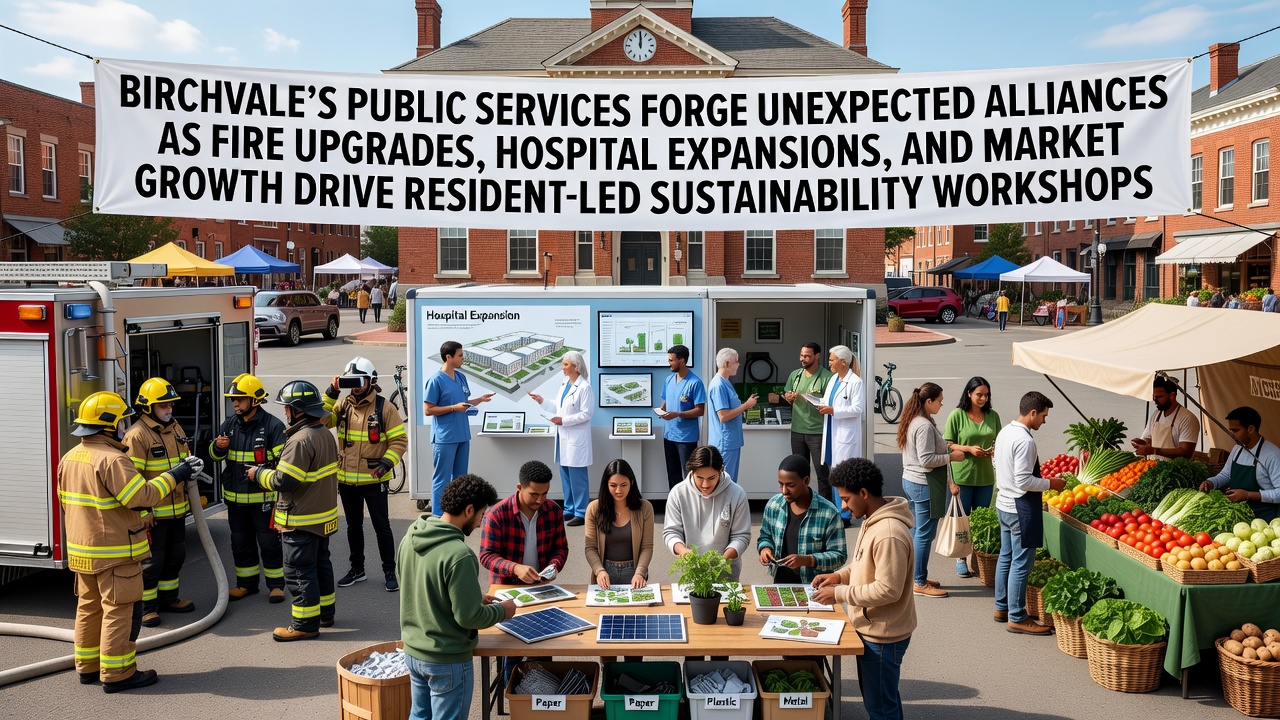
Fire department upgrades in Birchvale have intersected with hospital expansion projects and market growth since early 2026, creating new channels for resident involvement in sustainability planning. Local agencies began coordinating resources in March 2026 when fire safety retrofits required shared data on energy efficiency, while hospital construction teams sought input on waste reduction protocols that aligned with broader environmental goals. Market vendors contributed supply chain insights that helped tie these efforts together, leading to a series of workshops organized directly by residents.
Fire Safety Improvements Create Data Sharing Opportunities
Upgrades to Birchvale's fire stations incorporated energy-efficient equipment and monitoring systems that track resource use in real time. These systems generated datasets on water consumption and power loads during emergency responses, information that proved useful for other public services planning their own infrastructure changes. By October 2026, fire officials had shared preliminary findings with hospital planners, showing how predictive maintenance reduced operational waste by measurable percentages according to internal logs.
Residents noticed these overlaps and initiated contact between departments. Workshop sessions held in community centers allowed participants to review the fire department's efficiency metrics alongside hospital expansion blueprints. This exchange revealed common needs around stormwater management and renewable energy integration, prompting joint training modules that covered both emergency preparedness and conservation techniques.
Hospital Expansions Drive Cross-Agency Coordination
The hospital expansion project, which added new wings and updated utility systems, required compliance with regional environmental standards. Construction reports indicated that material sourcing and disposal practices needed adjustment to meet updated guidelines from health authorities. Birchvale's public works department stepped in to align these requirements with existing municipal recycling programs, and the resulting protocols became templates for other local projects.
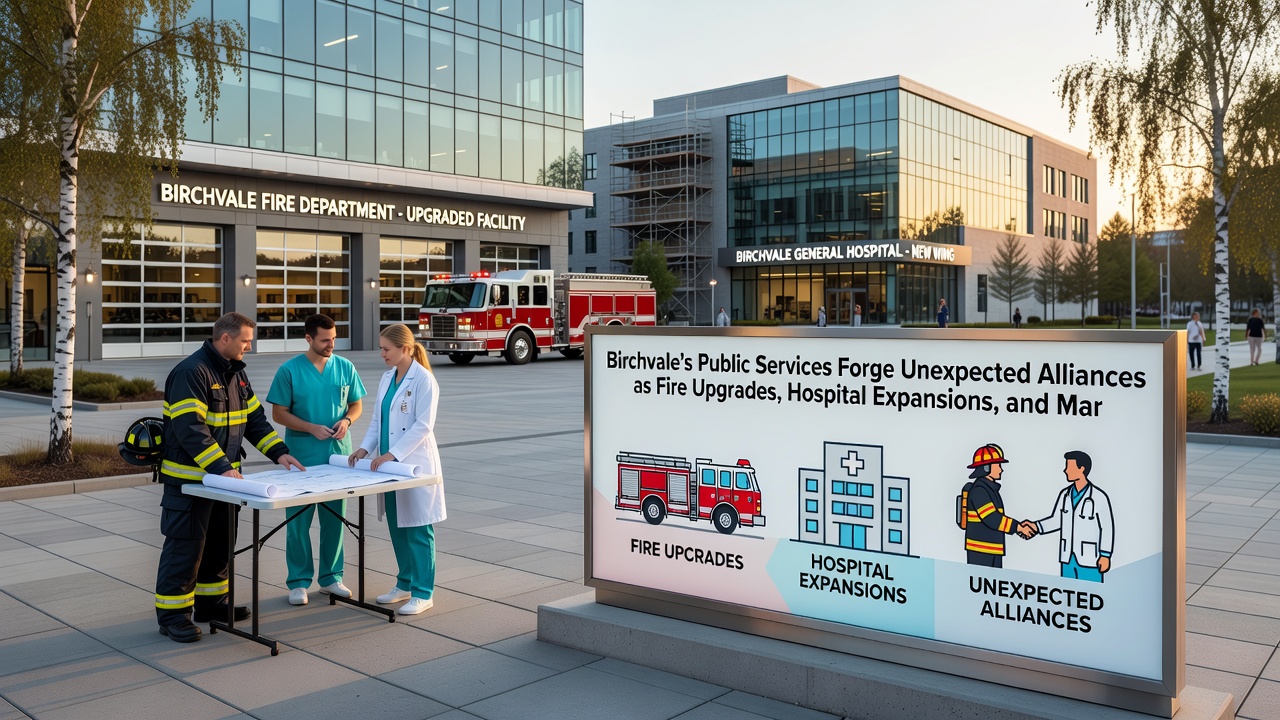
Market vendors participated when hospital dietary services requested locally sourced, low-impact produce. This connection expanded into broader discussions about supply chain resilience during the October 2026 workshops. Participants examined how agricultural practices near Birchvale could support both food security and reduced transportation emissions, using case examples from comparable mid-sized communities.
Market Growth Supplies Practical Examples for Workshops
Local market activity increased throughout 2026 as new vendors joined established sellers, bringing attention to packaging alternatives and seasonal inventory management. These operational details fed directly into resident-led sessions that explored scalable sustainability practices. Data collected at market stalls on waste volumes helped illustrate the impact of reusable containers and bulk purchasing systems during workshop demonstrations.
Observers note that the combination of these three developments created momentum for alliances that extended beyond single-issue meetings. Fire safety teams contributed expertise on hazard-resistant building materials, hospital administrators provided guidance on infection control during material reuse, and market organizers facilitated logistics for distributing workshop materials. The resulting network operates through monthly resident coordination meetings rather than top-down directives.
Resident-Led Sessions Focus on Integrated Solutions
Workshops emphasize hands-on activities that connect the three areas. One session series examines how upgraded fire suppression systems can incorporate greywater recycling, while another reviews hospital construction timelines against market-driven demand for eco-certified products. Attendance records from October 2026 show consistent participation across age groups and neighborhoods, with sessions held at rotating venues to accommodate different schedules.
External resources have informed some discussions. Information from environmental protection guidelines on community-scale resource management appears alongside local measurements of energy savings. A separate reference point comes from Canadian public health infrastructure reports, which outline similar coordination models between healthcare facilities and emergency services.
Conclusion
These developments illustrate how Birchvale's public services have formed working relationships through shared infrastructure demands and resident initiative. The workshops continue to evolve as new data from fire systems, hospital operations, and market activities becomes available, maintaining focus on practical applications that serve multiple community needs simultaneously.