Willa Russell · 29 October 2026
Unexpected Craft Initiatives Arise from Birchvale Stream Monitoring Data
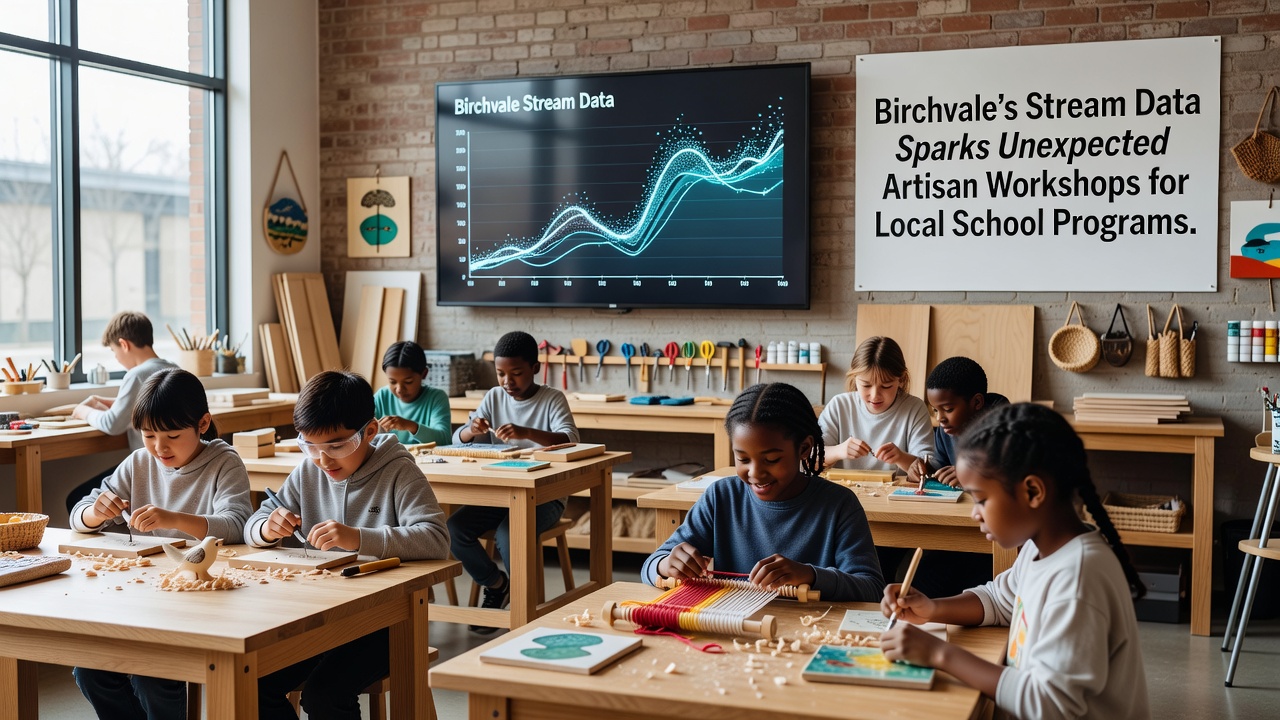
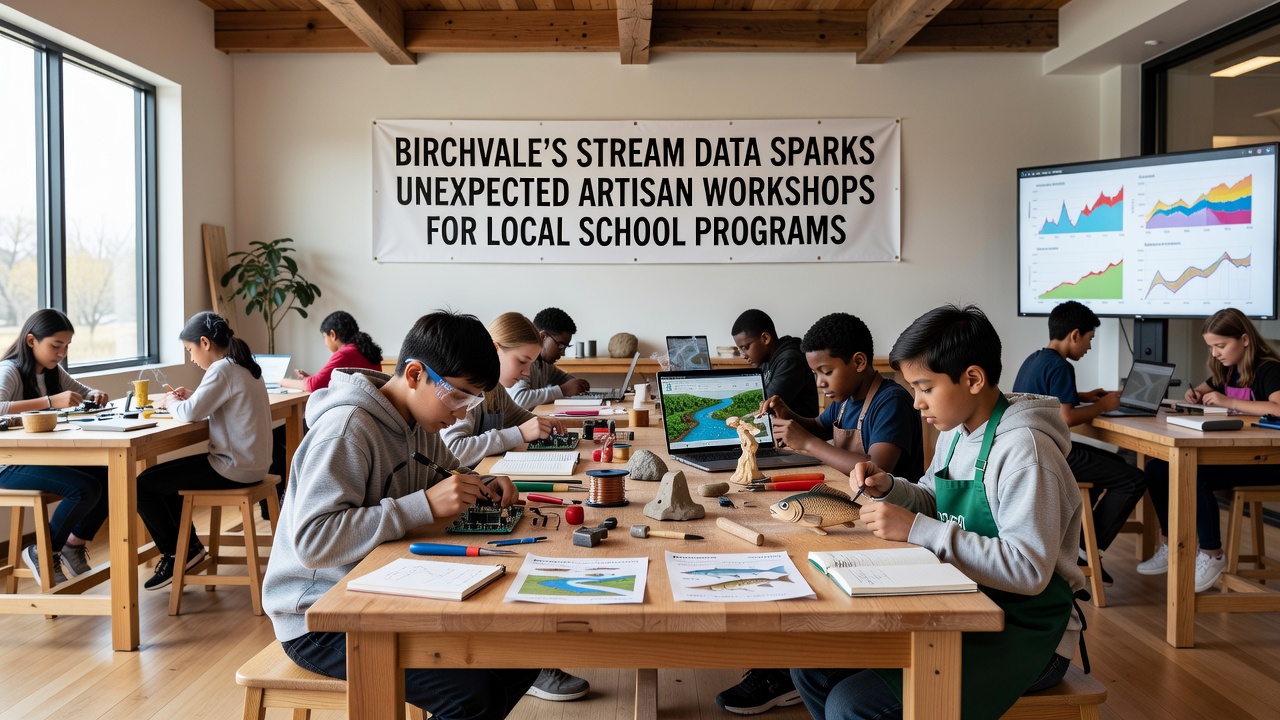
Stream monitoring stations along the waterways near Birchvale have generated datasets on water flow, temperature fluctuations, and sediment levels since their installation several years ago, and these records now feed directly into artisan workshops at local schools where students translate numbers into handmade crafts and visual art pieces. Local educators integrated the raw figures from sensors placed at multiple points along the main stream corridor, and by October 2026 several programs had expanded to include weekly sessions that combine environmental measurements with traditional craft techniques such as weaving, pottery, and printmaking.
Data Collection and Initial Integration
Monitoring equipment records continuous readings on dissolved oxygen, pH balance, and seasonal discharge rates, and school administrators obtained access to summarized reports through a partnership with regional environmental agencies. Teachers then organized the figures into accessible charts that students use as inspiration for pattern designs on textiles or color schemes in ceramic glazes. One middle school group mapped monthly temperature averages onto a series of hand-dyed fabrics, while another high school class created pottery vessels whose heights corresponded to peak flow measurements taken during spring runoff periods.
Workshop Structure and Participation
Each session runs for ninety minutes twice a week after regular classes, and participants rotate through stations where they interpret specific data points before applying them to their chosen medium. Instructors supply materials funded by small grants from state education offices, and attendance records show consistent involvement from over two hundred students across four schools by the start of the 2026 academic year. Sessions often begin with a brief review of recent sensor outputs, after which students sketch preliminary ideas that connect quantitative trends to aesthetic choices.
Community Involvement and Resource Sharing
Local artisans volunteer as guest facilitators, demonstrating techniques that align with the numerical themes presented each month, and they receive small stipends drawn from school activity budgets. Families contribute recycled materials such as scrap wood and fabric remnants, which reduces costs while connecting household items to the stream data themes. Observers note that these contributions have grown steadily since the first pilot workshops began in late 2025, and the resulting pieces appear in rotating displays at the town library and community center.
Broader Educational Connections
School curricula now reference the monitoring datasets when covering units on local ecology, and mathematics classes incorporate simple statistical exercises drawn from the same sensor logs. According to figures from the National Center for Education Statistics, similar data-driven art programs have appeared in districts across several states, although Birchvale's version emphasizes physical crafts rather than digital media. Researchers at a Canadian university published a 2025 report examining how environmental datasets can support cross-disciplinary learning, and their findings align with the approach adopted here.
Future Plans and Adjustments
Program coordinators plan to expand offerings in November 2026 by adding evening sessions open to adult community members, and they intend to incorporate additional sensor locations upstream to increase the variety of available measurements. Equipment upgrades scheduled for early 2027 will provide higher-resolution readings, which educators expect will allow finer detail in the resulting artwork. Those involved continue to adjust session formats based on feedback collected through anonymous surveys distributed at the end of each term.
Conclusion
Stream data originally gathered for environmental tracking now supports ongoing artisan workshops that connect quantitative records with creative output in Birchvale schools, and participation continues to draw from multiple grade levels as the 2026 calendar year progresses. The approach links sensor measurements directly to hands-on projects without requiring advanced technical skills from participants, and the resulting crafts serve as tangible representations of local waterway conditions. Additional schools in neighboring districts have expressed interest in reviewing the model for potential replication.