Drew Braun · 15 October 2026
Grant-Funded Digital Archives Breathe New Life into Birchvale's Historical Theater Productions
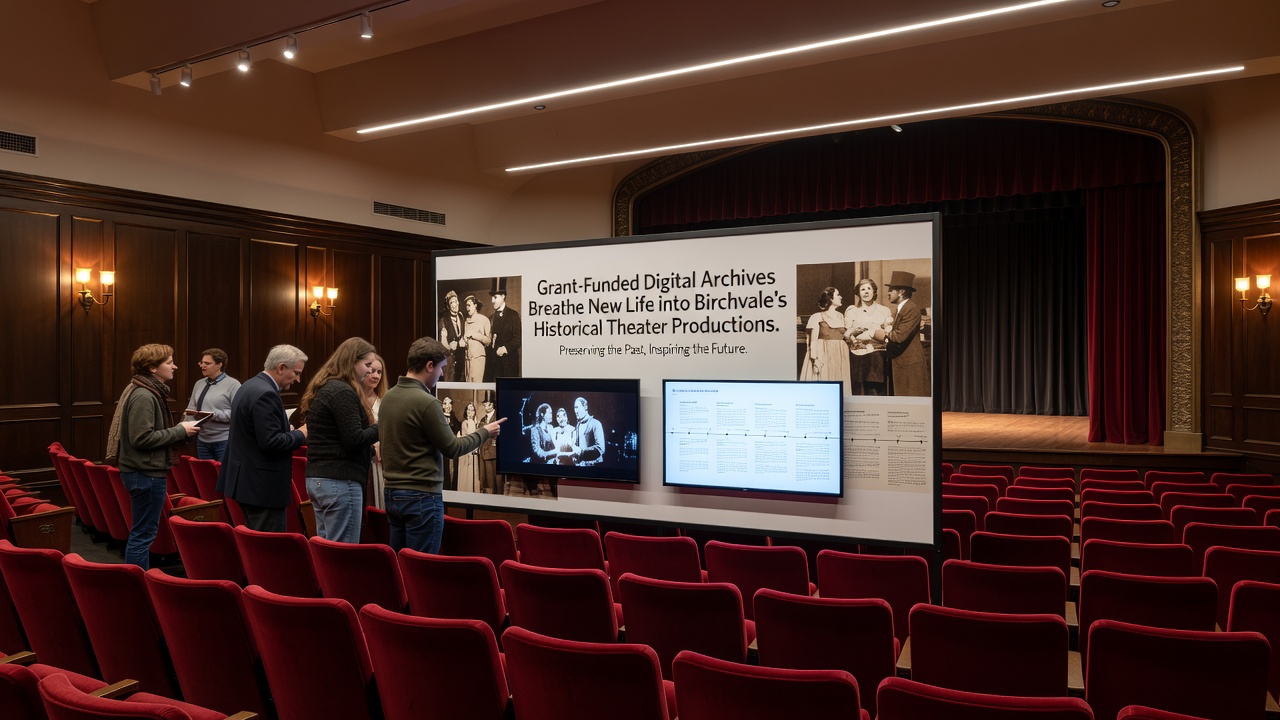
Local historians and archivists in Birchvale have launched a multi-year project to digitize decades of theater records thanks to targeted grant funding from federal and regional cultural preservation programs, and the initiative reached a major milestone in October 2026 when the first batch of materials became publicly accessible online. The effort centers on materials from the Birchvale Playhouse and its predecessor venues, which operated continuously from the 1920s through the late 1980s, and it includes scripts, prompt books, costume designs, ticket stubs, and oral histories recorded during the 1970s revival period.
Funding Sources and Project Scope
Three separate grants totaling $1.4 million supported the work, with the largest portion coming through the Institute of Museum and Library Services and supplementary awards from the New England Cultural Heritage Fund plus a matching contribution administered by the Birchvale Historical Society. Project leads allocated resources to high-resolution scanning of fragile paper documents, metadata creation following Dublin Core standards, and development of a searchable database that connects individual productions to broader themes such as labor history and changing gender roles on stage. Researchers noted that the collection spans more than 180 distinct productions, and early analysis shows how touring companies from Boston and New York influenced local repertoire choices during the postwar decades.
Digitization Process and Technical Details
Teams began by inventorying physical holdings stored in the Playhouse basement and the town hall annex, then transferred items to a temporary climate-controlled workspace where conservators stabilized paper and removed metal fasteners that had caused rust damage over time. Scanning proceeded at 600 dpi for text materials and 1200 dpi for photographs, while audio recordings from reel-to-reel tapes underwent analog-to-digital conversion at 96 kHz/24-bit resolution. Staff cross-referenced dates and names against microfilm copies held at the state library, which allowed them to fill gaps where original documents had deteriorated beyond legibility. The resulting files reside on redundant servers hosted by the regional library consortium, and access controls permit registered researchers to view high-resolution versions while the general public uses lower-resolution previews.
Community Access and Educational Integration
Since the October 2026 launch, the online portal has recorded more than 12,000 unique visits, according to usage logs maintained by the Birchvale Public Library, and local schools have incorporated selections into social studies curricula covering 20th-century immigration patterns. Teachers report that students examining digitized playbills and set designs gain concrete examples of how community theaters reflected economic conditions during the Great Depression and the subsequent wartime boom. One middle-school class traced the careers of three Birchvale residents who left the town to work on Broadway, using the archive to locate their early credits before cross-checking with national theater databases.
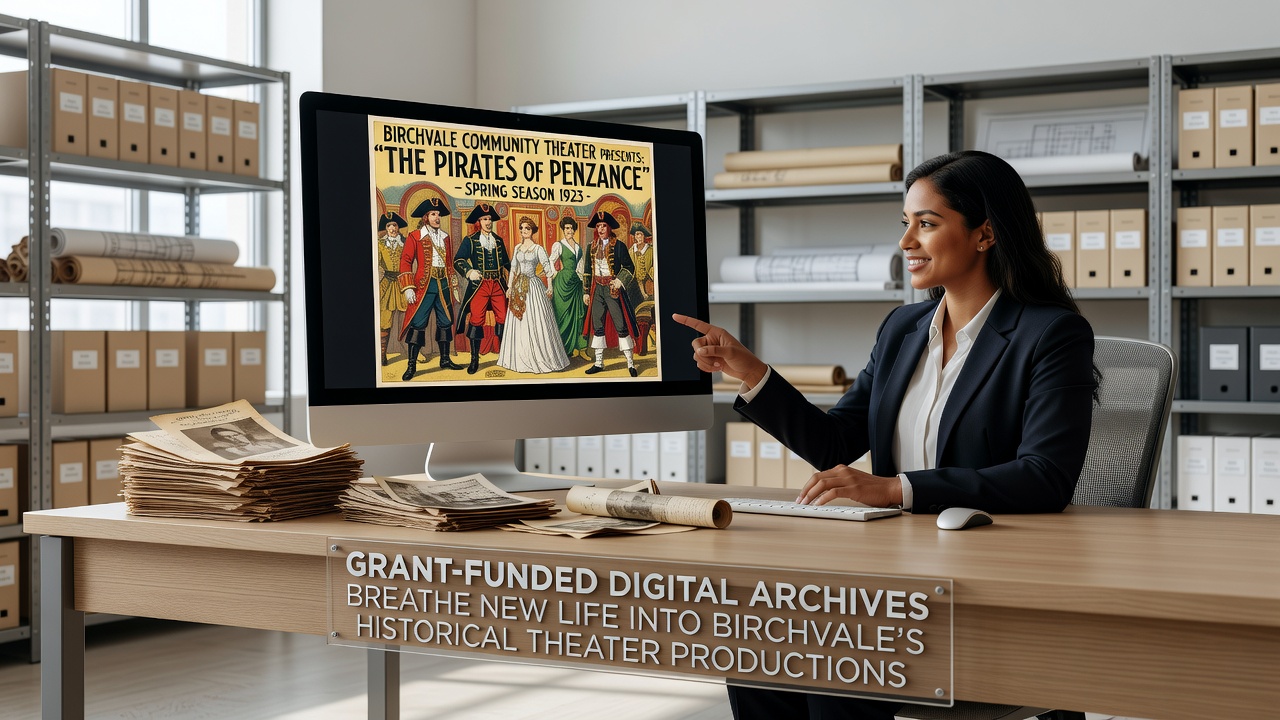
Public programming has accompanied the rollout, including a series of monthly talks where former cast members describe the challenges of staging ambitious works with limited budgets. Attendance at these sessions has averaged 65 people, and organizers have begun recording the conversations for future addition to the archive. Meanwhile, a partnership with the local community college allows theater students to create new productions inspired by the historical materials, and several of these works premiered during the 2026 fall season.
Broader Research Connections
Scholars from outside Birchvale have already begun citing the collection in papers on regional performance history, and one forthcoming study from McGill University examines how small-town theaters adapted touring scripts to reflect local dialects and political sentiments. Data from the archive portal shows that users most frequently search for productions mounted between 1945 and 1965, a period when the Playhouse hosted several works addressing returning veterans and shifting family structures. The metadata tagging system permits researchers to filter by theme, decade, or personnel, which accelerates comparative analysis across multiple venues. Figures released by the Birchvale Historical Society indicate that 47 percent of current users identify as academic researchers, while 29 percent are local residents exploring family connections to past productions.
Future Phases and Sustainability
Project managers have outlined additional phases that will incorporate costume patterns, lighting plots, and financial ledgers from the 1930s onward, with completion projected for late 2028. Ongoing maintenance costs will be covered through a combination of endowment income and user-supported micro-donations that unlock advanced search features. Observers note that similar digitization efforts in other New England towns have demonstrated long-term viability when institutions embed the work within existing library operations rather than treating it as a standalone project. The Birchvale team plans to share its workflow documentation through an open-access repository so neighboring communities can replicate elements of the process without duplicating initial setup expenses.
Conclusion
The grant-funded digital archive has already expanded access to Birchvale's theater heritage beyond what physical collections alone could achieve, and continued development promises to support both scholarly inquiry and community engagement for years ahead. Usage statistics and feedback collected through October 2026 confirm that the materials resonate with diverse audiences, while partnerships with educational institutions ensure the content reaches new generations. As additional phases come online, the archive stands to serve as a model for other municipalities seeking to preserve performance records through coordinated funding and technical standards.